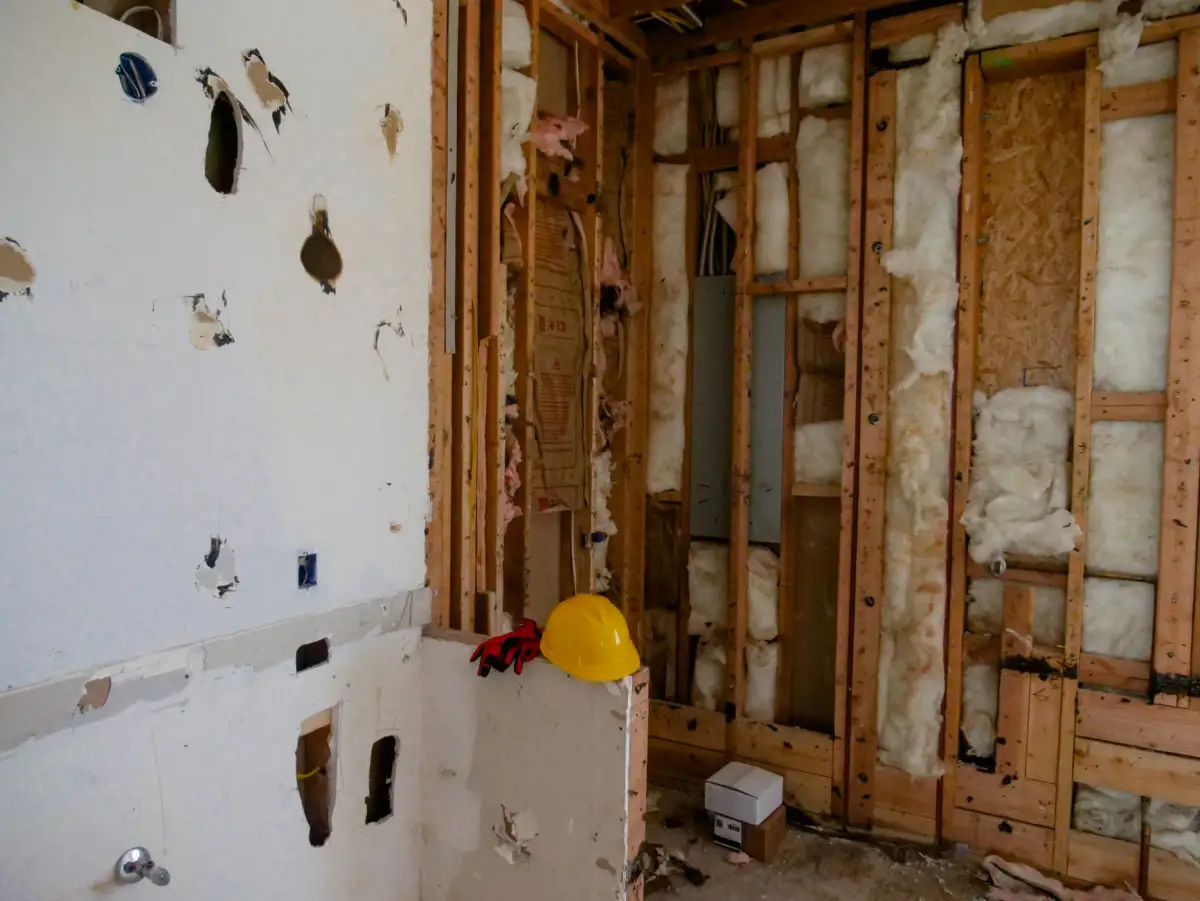
Water-Damaged Drywall Repair in Naperville, IL
Drywall removal, replacement, and finishing after a leak has already been stopped — assessed for how far the damage actually traveled.
Naperville Elite Drywall is your local resource for water-damaged drywall repair throughout Naperville, IL. We help homeowners connect with an experienced drywall professional once the source of the water has already been addressed.
This is drywall restoration, not plumbing, roofing, or mold remediation — those are separate trades, and the drywall repair only starts once the actual source of the water (a burst supply line, a roof leak, an overflowing appliance) has already been fixed. Patching over an active leak just means paying for the same repair twice, so the on-site visit always starts by confirming the source is stopped, not by assuming it.
Water damage isn't only a basement-near-the-DuPage-River problem — a slow leak under a kitchen sink near Naperville Crossings does the same kind of damage over months that a sudden pipe burst does in an afternoon, just slower and often unnoticed until the drywall is already soft or discolored. The scope of the repair usually comes down to how far the water traveled behind the wall before anyone found it, which is exactly what the assessment step below is for.
What’s Included in Your Water-Damaged Drywall Repair Quote
- Assessment of how far the water damage extends behind the visible surface
- Removal of compromised drywall (cut back past the water line, not just at the visible stain)
- Replacement board matched to the original thickness and location
- Full tape, mud, texture, and prime-ready finish
- Confirmation the water source has been addressed before work begins
How Water-Damaged Drywall Repair Works
Drywall Water Damage Assessment
The first visit is about finding the actual extent of the damage, not just the visible stain. Drywall wicks moisture upward and sideways from where it entered, which means the compromised area is almost always bigger than what shows on the surface — a small ceiling stain can mean several feet of saturated board behind the paint. A moisture meter is used to map how far the water traveled before deciding how much needs to come out, and this is also the step where the professional you're connected with confirms the leak itself has already been stopped, since drywall work can't responsibly start otherwise.
Damaged Drywall Removal
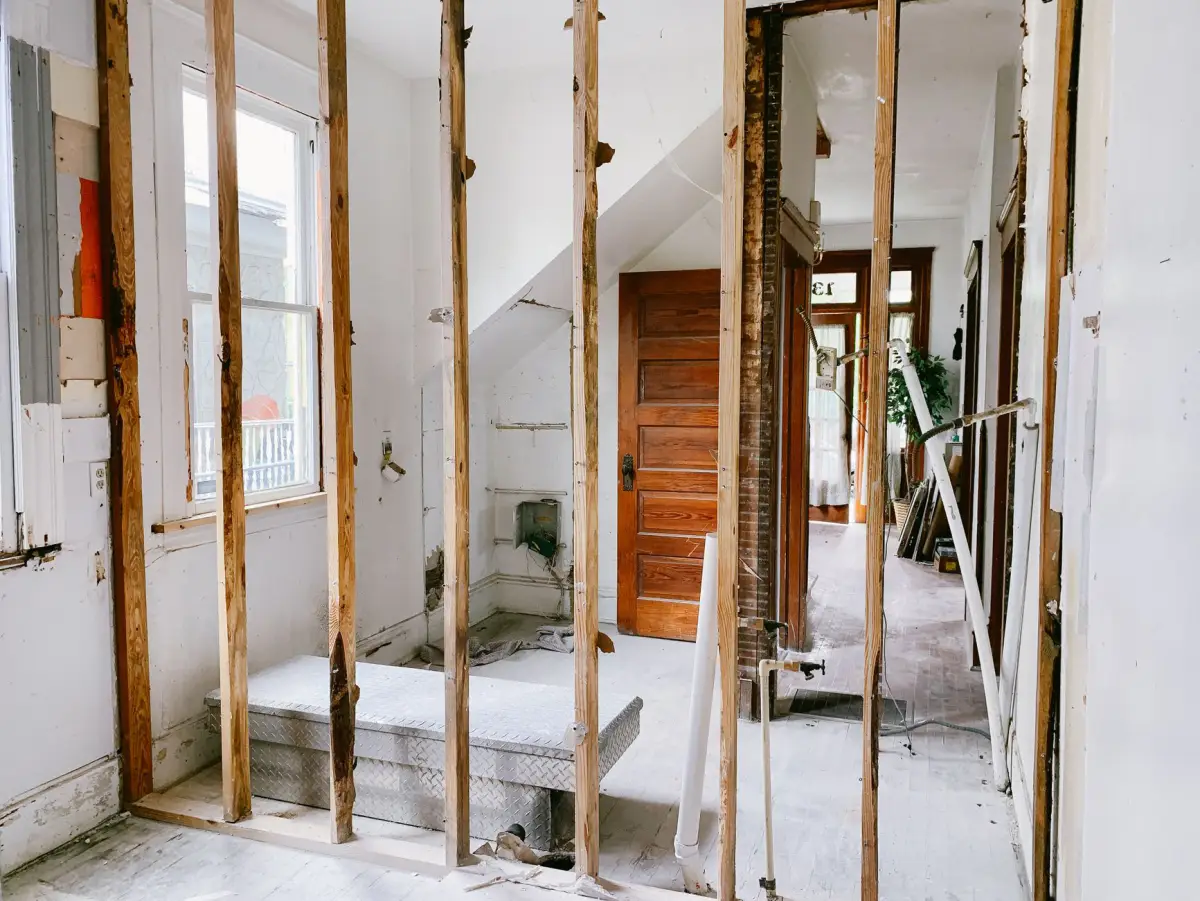
Once the extent is mapped, the compromised drywall gets cut out — typically past the visible water line by several inches to a foot, since board that looks dry at the edge can still be structurally weakened from moisture exposure. Insulation behind the wall, if it was saturated, usually needs to come out too, since wet insulation loses R-value and won't dry out fully on its own once it's sealed back behind new drywall. This step is also when any lingering mold concerns on framing (not drywall) should be flagged for a separate mold-remediation specialist if needed.
Wall and Ceiling Drywall Replacement
New board goes in matched to the original thickness and location — a ceiling gets 5/8-inch board where that's what was there originally, a bathroom wall gets moisture-resistant board given what just happened to the old one. Framing is checked for any remaining moisture with a meter before new board goes up, since sealing new drywall over still-damp studs just sets up the same problem again later. This is the step where a repair actually becomes more resilient than what was there before, not just a cosmetic fix.
Drywall Finishing After Water Damage
Taping, mudding, sanding, and texture matching follow the same process as any other drywall repair, with one added consideration: any remaining discoloration in adjacent, undamaged drywall needs a stain-blocking primer before paint, or the old water stain can eventually bleed back through fresh paint over time. The texture match has to account for the fact that this patch is often larger than a typical repair, spanning more of the wall or ceiling than a simple hole or crack would.
Signs You Need Water-Damaged Drywall Repair
- A brown, yellow, or gray stain on a wall or ceiling
- Drywall that feels soft, spongy, or bulging when pressed
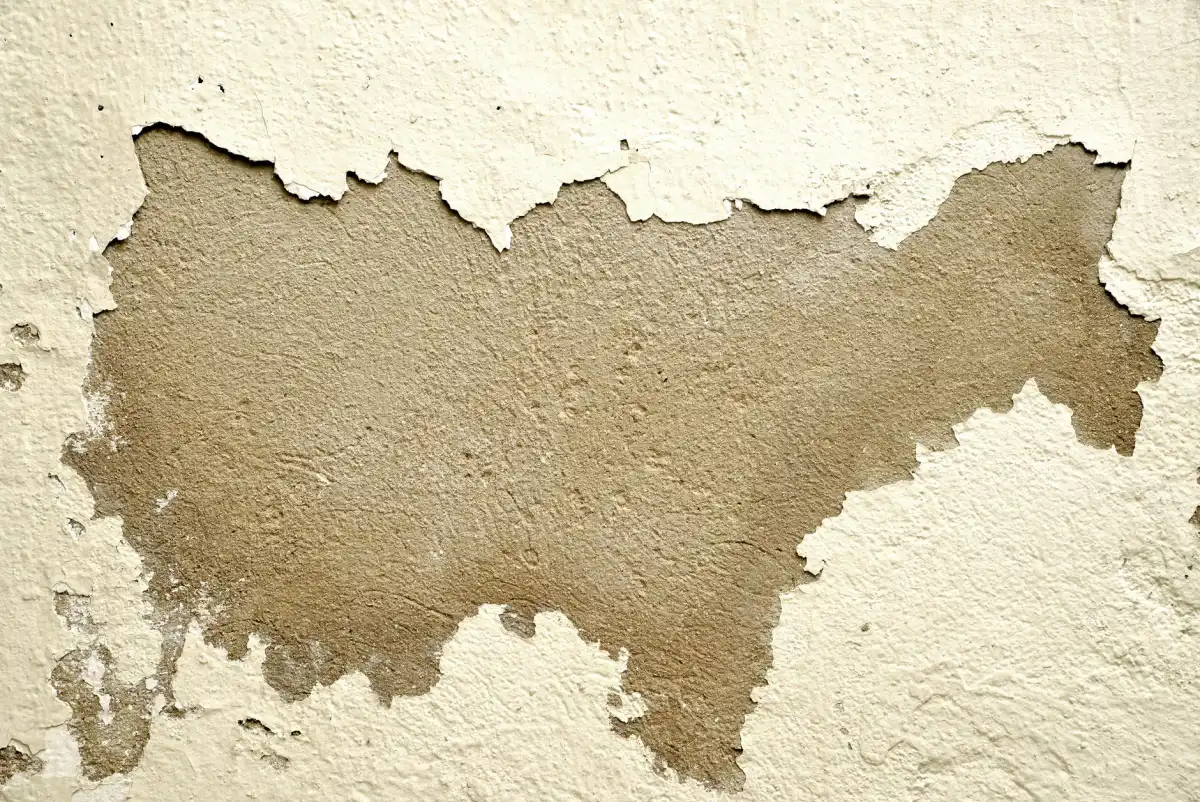
- Paint or texture that's bubbling, peeling, or flaking
- A musty smell in a room with no visible source
- Any drywall that was near a recently fixed leak, overflow, or roof issue
How Water-Damaged Drywall Repair Works
- 1
Confirm the Source Is Stopped
Before any drywall work is scoped or scheduled, the professional you're connected with confirms whatever caused the water damage has actually been resolved — a plumber's repair, a roofer's fix, or a resolved appliance overflow. This isn't a formality; drywall replaced over an active or unresolved leak will just show the same damage again, often faster the second time since the new board hasn't had a chance to fully dry between exposures. If the source hasn't been addressed yet, that gets flagged and the drywall work waits.
- 2
Moisture Mapping and Scope
A moisture meter is used to trace exactly how far the water traveled through the wall or ceiling assembly, since drywall carries moisture well past the visible stain. This step sets the real scope of the job — sometimes a stain that looks small on the surface turns out to affect several feet of board once it's mapped, and sometimes a large-looking stain is more contained than it appears. Framing, insulation, and any trim in the affected area get checked at the same time, since those often need attention alongside the drywall itself.
- 3
Removal and Drying Check
Compromised drywall is cut out past the mapped water line, along with any saturated insulation, and the exposed framing is checked with a moisture meter before anything new goes up. If framing is still reading damp, that area is left open longer to dry rather than sealing moisture behind new board — this is the step most likely to get rushed on a lower-quality job, and it's the one most likely to cause a repeat problem if it is.
- 4
Replace, Finish, and Verify
New board goes up matched to the original thickness and type (moisture-resistant where it makes sense given what happened), then gets taped, mudded, sanded, and texture-matched through the same multi-coat process used on any drywall repair. A stain-blocking primer step gets added on any adjacent area where old discoloration might otherwise bleed through fresh paint. The finished area is checked under a raking light and confirmed dry throughout before the job is called complete.
What Does Water-Damaged Drywall Repair Cost in Naperville, IL?
What Affects the Price
- How far the water traveled behind the wall (found during assessment, not always obvious from the stain alone)
- Whether insulation also needs to be replaced
- Ceiling repairs vs. wall repairs
- Texture complexity and the size of the area needing a stain-blocking primer
- Whether the framing needs extra drying time before new board goes up
The real cost driver here is almost always the moisture mapping result, not the visible stain — a repair that looks like it should be small on the surface can turn out to need several feet of board replaced once the actual extent behind the wall is found.
What to Look for in a Naperville Drywall Contractor
Won't Patch Over an Unresolved Leak
The source gets confirmed stopped before any drywall work starts — not assumed, confirmed.
Moisture-Mapped, Not Guessed
A moisture meter finds the real extent of the damage instead of only replacing what's visible.
Framing Checked Before Closing the Wall
New drywall doesn't go up over still-damp studs — that just delays the same problem.
Clear About What's Included
This covers drywall restoration only; plumbing, roofing, and mold remediation are handled by separate trades, and you'll be told plainly if that's what's actually needed first.
Residential and Commercial Work
Residential
Kitchens, bathrooms, basements, and any ceiling below a second-floor bathroom are the most common water-damage repair calls in Naperville homes.
Commercial
Commercial water damage — from a roof leak, sprinkler head, or plumbing failure — is covered under Commercial Drywall Repair, which accounts for after-hours scheduling around business operations.
When This Isn’t the Right Fit
- If the leak, overflow, or roof issue hasn't been fixed yet, that's the first call to make — a plumber or roofer, not a drywall repair.
- If you're seeing visible mold growth, that typically needs a mold-remediation specialist before or alongside the drywall work, not instead of it.
- If you want a specific contractor you've already worked with, outside this relationship, that's a call you're free to make directly.
Frequently Asked Questions
- How much does water-damaged drywall repair cost in Naperville, IL?
- It depends on how far the damage extends behind the wall, which isn't always visible from the surface stain — the moisture-mapping step determines the real scope. Get an immediate on-site quote once the water source has been addressed for an accurate number.
- Can water-damaged drywall be dried out instead of replaced?
- Drywall that's been saturated typically loses structural integrity even after it dries, since the paper and gypsum core don't recover the way solid wood framing can. In most cases, saturated drywall needs to be replaced rather than just dried.
- Do you fix the leak too?
- No — this covers drywall removal, replacement, and finishing only. The leak or water source itself needs a plumber, roofer, or the appropriate trade, and that work should happen before the drywall repair starts.
- How do I know if there's mold behind water-damaged drywall?
- A musty smell, visible discoloration, or damage that sat unaddressed for more than a day or two are all reasons to have it checked by a mold-remediation specialist before or during the drywall repair. This isn't something a drywall repair alone can rule out.
- Will my homeowners insurance cover water-damaged drywall repair?
- Sudden, accidental water damage — a burst pipe, an appliance failure — is often covered, while damage from a long-term, known leak sometimes isn't. Check directly with your insurance provider; this is a coverage question, not something a drywall professional can determine.
Learn More
- EPA — Mold, Moisture, and Your Home — Federal guidance on moisture damage and when mold remediation is needed.
- Insurance Information Institute — Water Damage Claims — General guidance on how homeowners insurance typically treats water damage.
Need Water-Damaged Drywall Repair in Naperville, IL?
Tell us what’s going on and get an immediate on-site quote — no charge for the estimate, and no obligation to book it.
Get My Free Estimate