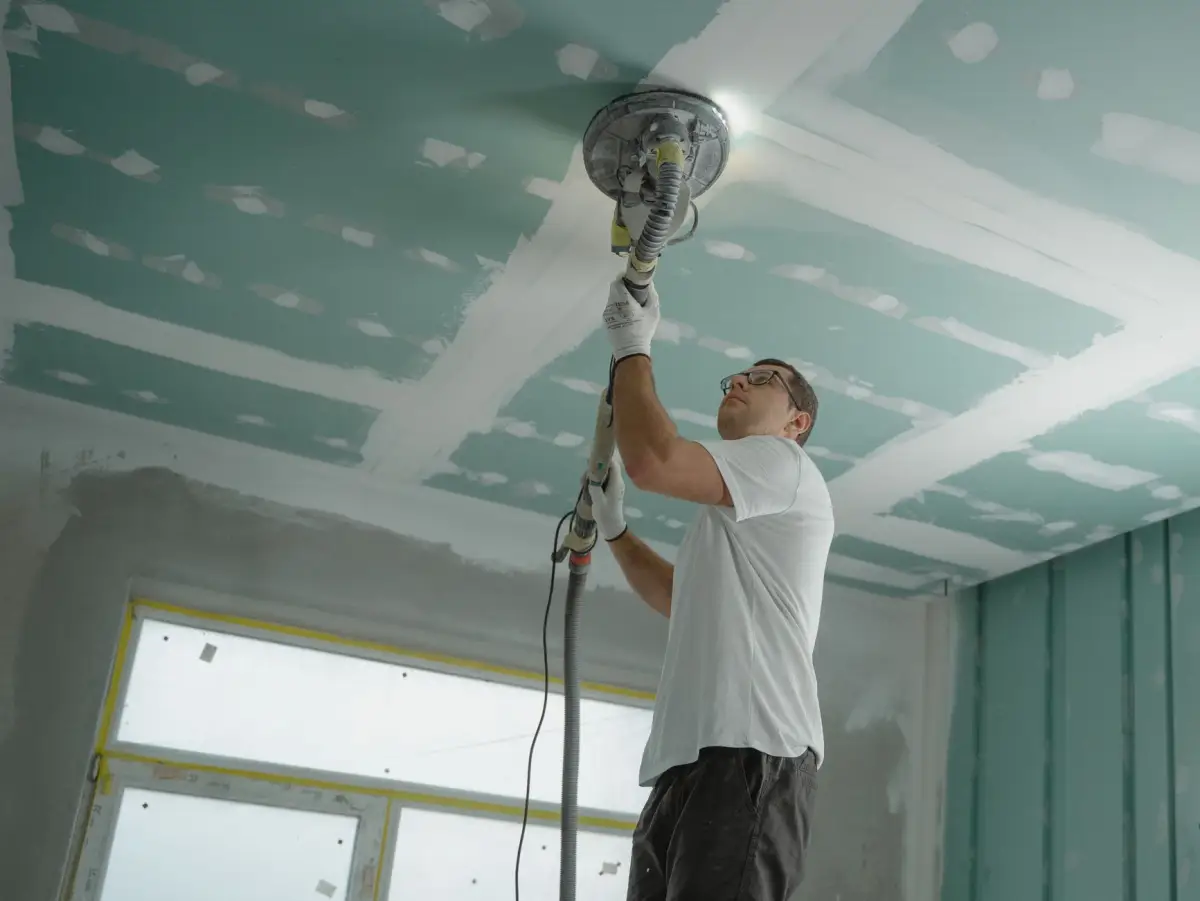
Ceiling Drywall Repair in Naperville, IL
Cracked, sagging, or stained ceiling drywall repaired and texture-matched, with a framing check that decides whether a patch will actually hold.
Naperville Elite Drywall is your local resource for ceiling drywall repair throughout Naperville, IL. We help homeowners connect with an experienced drywall professional who checks what's above the ceiling, not just what's visible on it.
Ceiling repairs get treated differently from wall repairs for a real reason — gravity. A wall patch just needs to hold; a ceiling patch needs to hold against its own weight indefinitely, which is why sagging and old, undersized board are common failure points that a wall repair never runs into. A hairline crack running along a ceiling seam is often just normal truss movement, but a ceiling that's visibly bowing or has a soft spot when pressed is a different problem that needs the framing checked before any patching starts.
Older homes near Downtown Naperville and around the Riverwalk sometimes still have ceiling board that's thinner than what's used today, which is part of why sagging shows up there more than in newer subdivisions. Water staining is the other common ceiling call — a brown ring from a past roof or plumbing leak, or an active one — and the repair only makes sense once whatever caused the stain has actually stopped.
What’s Included in Your Ceiling Drywall Repair Quote
- Framing and fastener check before any patch work starts
- Crack, hole, and sag repair with matched board thickness
- Water stain assessment (repair only — see Water-Damaged Drywall Repair for source-related work)
- Texture match for knockdown, orange peel, or smooth ceilings
- Prime-ready finish on the repaired section
Ceiling Drywall Problems We Repair Most Often
Ceiling Crack Repair
Cracks along a ceiling seam or running out from a corner are usually the result of normal seasonal framing movement, since roof trusses expand and contract more than wall studs do across a Midwest heating season. The fix is the same core process as a wall crack — cutting out the old tape, re-taping with a flexible joint compound, and feathering wide enough that the repair doesn't telegraph through paint — but it takes longer overhead, since every coat has to be applied and sanded working against gravity instead of on a vertical surface.
Sagging Drywall Ceiling Repair
A ceiling that sags or feels soft when pressed usually means the board itself has lost its structural integrity — from age, moisture exposure, or simply being too thin for the span it's covering. This isn't a patch job; the sagging section typically needs to come down and be replaced with properly sized board (5/8-inch is standard for ceiling spans specifically because it resists sag better than 1/2-inch). Left alone, a sagging ceiling only gets worse, and in some cases can eventually fail enough to be a real safety issue, not just a cosmetic one.
Ceiling Hole and Patch Repair
Holes in ceilings usually come from accessing something above — attic insulation work, an electrical fixture swap, or a plumbing inspection — rather than impact damage, which is far more common on walls. The patch process is similar to a wall hole repair, but working overhead means the new board section has to be properly supported and screwed to blocking before taping starts, since there's no way to prop it in place the way you could on a vertical wall.
Water-Damaged Ceiling Drywall
A stained or discolored ceiling almost always means water got in from above at some point, whether from a roof issue, an upstairs plumbing leak, or condensation from an attic ventilation problem. Repairing this drywall only makes sense once that source is confirmed stopped — patching over an active leak just means doing the repair twice. Once it's dry, the stained section usually needs to be cut out rather than just painted over, since a water stain can bleed back through fresh paint over time if the drywall itself wasn't replaced.
Ceiling Drywall Replacement
When a ceiling section is too damaged, sagging, or water-affected to patch, full replacement of that section is the more durable option. This means cutting back to the nearest joists on each side, hanging new board matched to the original thickness, and running the full tape-mud-texture process to blend it with the surrounding ceiling — the same standard applied to any new installation, just retrofitted into an existing room.
Signs You Need Ceiling Drywall Repair
- A crack running along a ceiling seam or out from a corner
- A ceiling that feels soft or visibly sags when you look at it from across the room
- A brown or yellow water stain, active or old
- A hole from an access point for insulation, electrical, or plumbing work
- Peeling paint or texture that's separating from the ceiling surface
How Ceiling Drywall Repair Works
- 1
Framing and Cause Check
Every ceiling repair starts overhead with a look at what's causing the problem, not just what's visible from the floor. This means checking joist spacing and condition, looking for moisture staining that might indicate an active or recent leak, and pressing gently on any soft-feeling area to gauge how compromised the board actually is. A crack gets traced to see whether it's isolated or connects to a pattern that suggests broader movement. This step decides everything that follows — a hairline crack from seasonal movement gets a very different scope of work than a soft, water-stained section that needs to come down.
- 2
Cut-Out and Support
Damaged ceiling board gets cut back to the nearest joist on each side, since a patch that isn't screwed into solid framing will eventually sag or pop loose under its own weight. Working overhead, the new board section is measured and cut to fit tightly, then temporarily supported (often with a T-brace or a helper) while it's screwed into the joists. Getting the new section flush with the surrounding ceiling, not proud or recessed, is what allows the taping step to actually disappear rather than leaving a visible ridge or shadow line once it's painted.
- 3
Tape, Mud, and Texture Match
The same three-coat taping process used on walls applies to ceilings, but every pass is done working against gravity, which is part of why ceiling repair typically costs more per square foot than an equivalent wall repair. Texture matching matters even more on ceilings than walls, since ceiling texture (especially older knockdown or stipple patterns) catches light differently than a wall does and a mismatch is often more visible from below than a wall patch would be from the side.
- 4
Sand, Prime-Check, and Final Inspection
Once dry, the patch is sanded flush and checked with a work light held at a low angle across the ceiling surface — this is the only reliable way to catch a ridge, dip, or texture mismatch before paint makes it permanent. For a water-stained repair, this step also confirms there's no remaining discoloration bleeding through that would need a stain-blocking primer before paint goes on. The area is left ready for paint, with the professional confirming the source of any prior water damage was already resolved before the repair was started.
What Does Ceiling Drywall Repair Cost in Naperville, IL?
What Affects the Price
- Size of the damaged or sagging area
- Whether it's a patch or a full section replacement
- Water staining that needs a stain-blocking primer step
- Texture complexity (knockdown, stipple, and older hand-applied textures take longer to match)
- Ceiling height and access (vaulted or high ceilings take more setup time)
Ceiling work almost always costs more per square foot than the equivalent wall repair, purely because every step — hanging, taping, mudding, sanding — takes longer working overhead against gravity than it does on a vertical surface.
What to Look for in a Naperville Drywall Contractor
Checks the Cause Before Patching
A sagging or stained ceiling gets diagnosed first — patching over an active problem just means paying for the repair twice.
Properly Sized Replacement Board
Sagging sections get replaced with board sized correctly for the span, not just swapped for whatever's on hand.
Texture-Matched From Below
Ceiling texture gets checked from floor level under real lighting, not just up close, since that's how it'll actually be seen.
Won't Patch Over an Active Leak
If the water source hasn't been stopped yet, you'll be told that up front instead of getting a repair that fails again.
Residential and Commercial Work
Residential
Ceiling repairs are common throughout Naperville's older housing stock, where original board is often thinner than what's used today.
Commercial
Commercial ceiling drywall — above drop ceilings, in corridors, or in occupied retail and office space — is covered on the Commercial Drywall Repair page.
When This Isn’t the Right Fit
- If water is actively coming through the ceiling right now, that source needs to be stopped first — a roofer or plumber, not a drywall repair, is the first call.
- If it's a small, isolated crack you're not bothered by, this may not be worth the cost of a service call — plenty of homes have minor ceiling cracks that never get worse.
- If you want a specific contractor you've already worked with, outside this relationship, that's a call you're free to make directly.
Frequently Asked Questions
- How much does ceiling drywall repair cost in Naperville, IL?
- Ceiling repairs typically cost more per square foot than wall repairs of the same size, since every step is done working overhead. The exact number depends on the size of the damage, whether board needs replacing, and texture complexity — get an immediate on-site quote for a real number.
- Is a sagging ceiling dangerous?
- A visibly sagging ceiling means the board has lost structural integrity and should be looked at — in some cases it can eventually fail. It's worth having it assessed rather than waiting to see if it gets worse.
- Can you repair a ceiling without replacing the whole thing?
- Most cracks, small holes, and isolated stains can be patched rather than requiring a full ceiling replacement. Sagging or heavily water-damaged board usually can't be patched and needs the affected section replaced.
- How do you match ceiling texture after a repair?
- The existing texture pattern (knockdown, orange peel, or stipple) gets tested on a scrap piece first, matching spray pattern or hand technique before it's applied to the actual repair, so the patch blends in under normal ceiling lighting.
- What causes a water stain on a ceiling if there's no active leak?
- A stain can be left over from a leak that's already been fixed — a past roof issue, a resolved plumbing leak upstairs, or old condensation from an attic ventilation problem. Confirm with a roofer or plumber that the source is actually stopped before scheduling the drywall repair.
Learn More
- Gypsum Association — Ceiling Board Span and Sag Resistance — Technical standards for ceiling board thickness and span requirements.
- EPA — Mold and Moisture Guidance — What to check for after a water-damaged ceiling has been repaired.
Need Ceiling Drywall Repair in Naperville, IL?
Tell us what’s going on and get an immediate on-site quote — no charge for the estimate, and no obligation to book it.
Get My Free Estimate