Drywall Repair in Naperville, IL
Holes, cracks, popped fasteners, and damaged drywall patched, textured to match, and left paint-ready — quoted on-site.
Naperville Elite Drywall is your local resource for drywall repair throughout Naperville, IL. We help homeowners connect with an experienced drywall professional for everything from a single nail pop to a full wall section replacement.
Most repair calls fall into a handful of categories, and the right fix depends on which one it actually is — a doorknob-sized hole patches differently than a crack that keeps coming back, and a popped fastener is a five-minute fix that a lot of homeowners try themselves before calling anyone. The professional you're connected with sorts that out on-site: is this cosmetic, or is something behind the wall (settling, moisture, a loose stud) causing it to keep happening.
Repairs around Downtown Naperville and along the Ogden Avenue corridor often involve older plaster-to-drywall transitions or decades of paint layers that make texture matching harder than a newer home's flat, single-coat walls. A repair that looks simple from six feet away — a crack over a doorframe, a scuff from moving furniture — can take longer to finish invisibly than it does to physically patch, since the texture and paint sheen match is what actually determines whether the repair is noticeable later.
What’s Included in Your Drywall Repair Quote
- On-site assessment of the damage and its likely cause
- Cut-out and patch, or full section replacement for larger damage
- Tape, mud, and sand to blend with the surrounding wall
- Texture match so the repair doesn't stand out under normal light
- Prime-ready finish (paint not typically included — confirm on your quote)
Types of Drywall Damage We See Most in Naperville Homes
Drywall Hole Repair
Holes usually come from doorknobs, furniture moves, or accidental impact, and the fix depends entirely on size. Anything smaller than a fist can typically be patched with a self-adhesive mesh patch and a few coats of joint compound feathered out past the edges. Anything larger — a hole from a door swung too hard into a wall, or a section removed to access plumbing — needs a cut-out patch: a piece of new board cut to fit the opening, backed and screwed to blocking, then taped and mudded like a seam. The size of the hole is what determines labor time here, not just materials.
Drywall Crack Repair
A hairline crack over a doorframe or in a ceiling corner is often just normal seasonal movement — wood framing expands and contracts with humidity, and drywall tape can flex at the joint without it meaning anything structural. A crack that's widening, running diagonally from a corner, or reappearing months after a previous patch is worth a closer look, since that pattern can point to settling framing rather than a cosmetic issue. Either way, the fix involves cutting out the cracked tape, re-taping with a flexible joint compound, and feathering the new coat wider than the original to keep it from telegraphing through paint.
Nail Pop and Screw Pop Repair
A nail or screw pop is a small dome or ring in the paint where a fastener has worked its way slightly loose from the framing behind it, usually from wood shrinkage over a heating season. It's a fast fix — the loose fastener gets removed or re-set below the surface, a new screw goes in nearby for better hold, and the spot gets skimmed with compound and feathered to blend. Homes with a few pops usually have several more starting in the same areas, so a repair visit often catches a handful at once rather than just the one that got noticed.
Damaged Drywall Replacement
When a section of wall or ceiling is compromised beyond a patch — impact damage, a section removed for plumbing or electrical access, or board that's been cut into repeatedly over the years — the damaged section gets cut back to the nearest stud on each side and replaced with new board matched in thickness to the original. This gives a cleaner, more durable result than trying to patch around a badly damaged edge, and it's usually the right call once a hole or crack has been patched more than once in the same spot.
Minor and Major Drywall Repairs
Minor repairs — a single hole, one or two nail pops, a short crack — are usually handled in a single visit, texture-matched and left ready for paint the same day. Major repairs, like water damage, a large impact area, or multiple rooms, take longer because they involve more drying time between joint compound coats and more surface area to texture-match consistently. The on-site quote should tell you which category a given job falls into before work starts.
Signs You Need Drywall Repair
- A hole from furniture, a doorknob, or accidental impact
- A crack that's widening, diagonal, or came back after a previous patch
- Small domes or rings in the paint where fasteners are popping
- A section of wall that's been patched more than once already
- Damage in a spot you're planning to paint or list the home soon
How Drywall Repair Works
- 1
Assessment
Every repair starts with figuring out what's actually causing the damage, not just what it looks like. A crack near a window or door gets checked for whether it's isolated or part of a pattern running along the same wall, since a pattern usually points to framing movement rather than a one-off. Nail pops get checked in the surrounding area, since where there's one, there are often several more just starting. This step also confirms whether the fix is a simple patch or needs a section replacement, which is the single biggest factor in how the quote is priced — guessing wrong here means either an underbid or a callback.
- 2
Cut-Out and Patch
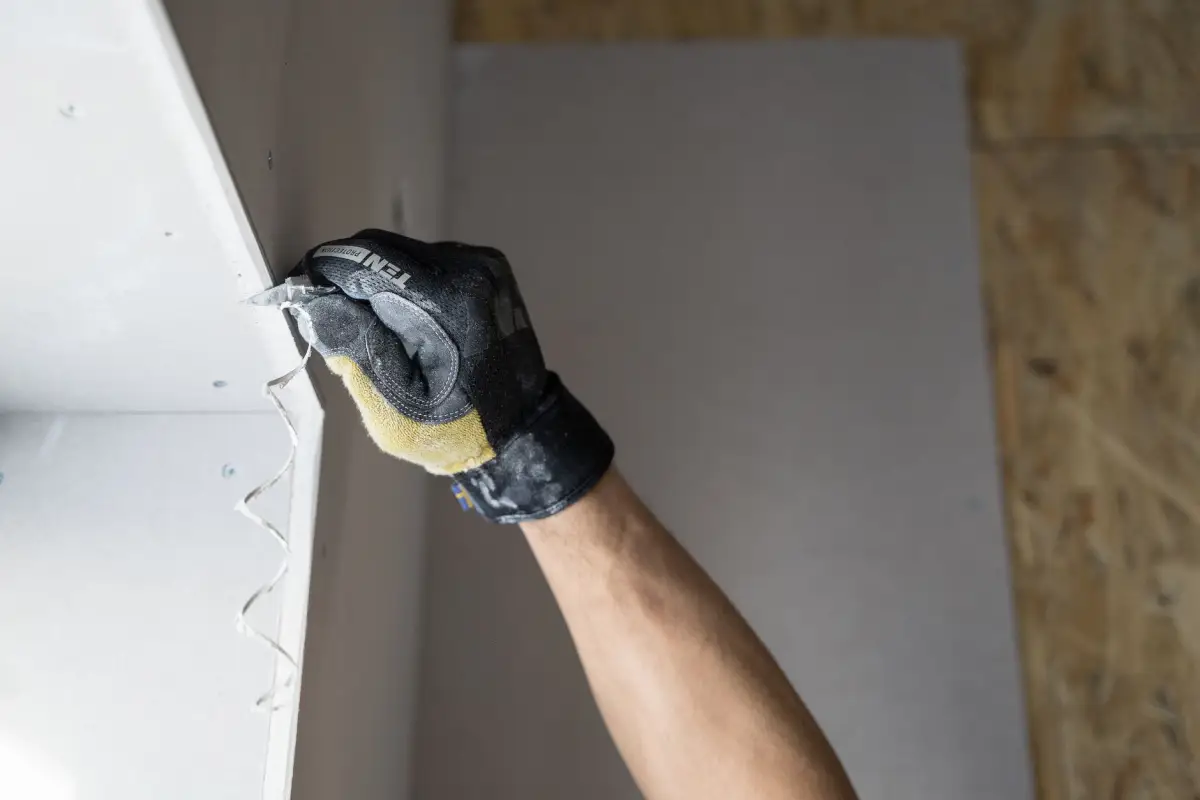
For anything beyond a small mesh-patch hole, the damaged area gets cut back to a clean edge — usually to the nearest stud on each side so the new piece has something solid to screw into, not just floating drywall paper holding it in place. A matching piece of board is cut to fit, backed if needed with a scrap furring strip for support, and screwed in flush with the surrounding surface. Getting the new piece flush with the existing wall (not proud or recessed) is what makes the next step, taping and mudding, actually disappear once it's finished.
- 3
Tape, Mud, and Texture Match
The seam gets taped and mudded in the same three-coat process used on new installation, with each coat feathered progressively wider than the last so the transition from old wall to new patch is gradual rather than a hard edge. Texture is the part that separates a good repair from an obvious one — most Naperville homes have either a knockdown, orange peel, or smooth finish, and matching it means testing the spray pattern or hand-texture technique on a scrap piece before touching the actual wall, since the wrong pattern is more noticeable than the patch itself would have been.
- 4
Sand and Final Check
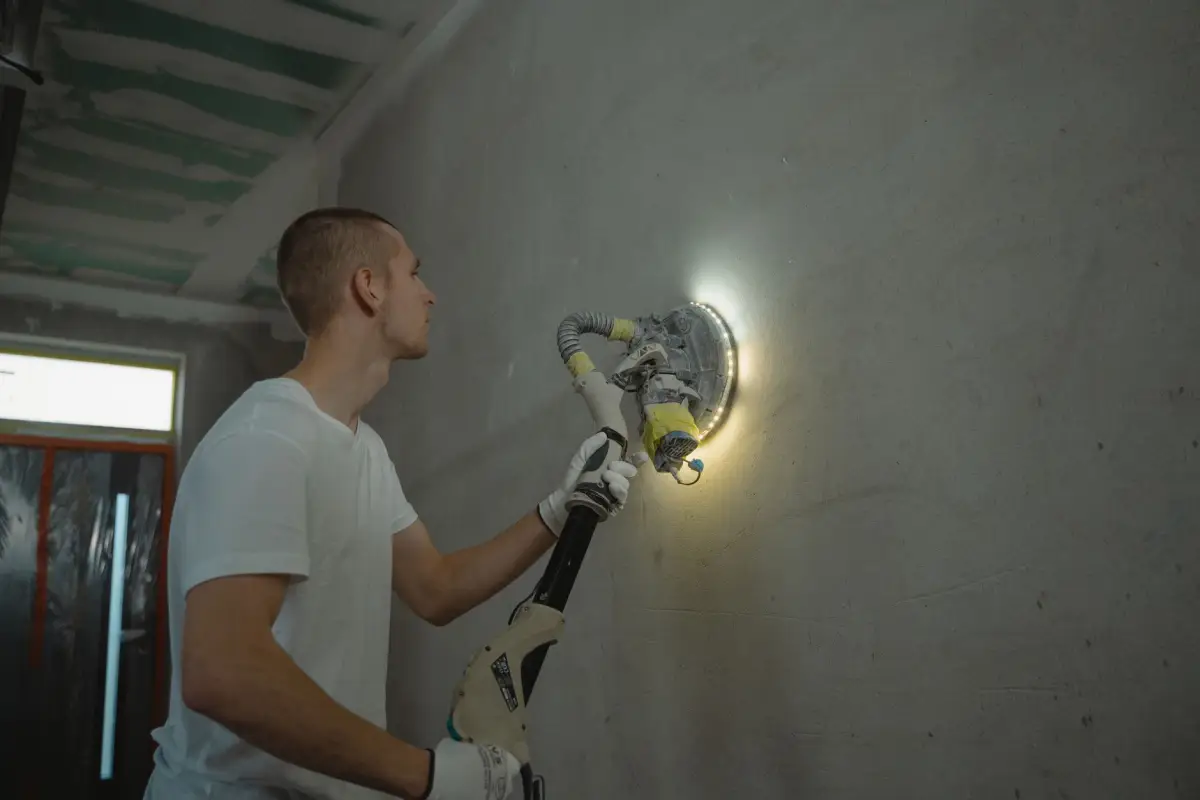
Once everything's dry, the patch gets sanded flush and checked under a raking light — the same low-angle light a lamp or window will eventually hit it with — to catch any ridge, dip, or texture mismatch before it's called finished. A patch that looks fine under overhead lighting can still show under a side-angled lamp, which is why this check happens with a work light held low against the wall rather than just eyeballing it from a few feet back. The area is left primer-ready; painting is typically a separate step unless it's included on the quote.
What Does Drywall Repair Cost in Naperville, IL?
What Affects the Price
- Size of the damaged area and number of spots being repaired
- Whether it's a patch or a full section replacement
- Texture type and how closely it needs to match the existing wall
- Ceiling repairs vs. wall repairs (ceiling work generally takes longer)
- Whether the cause of the damage needs to be addressed first (a leak, a loose fixture, etc.)
Texture matching is the factor that surprises people most — a plain smooth wall patches faster and cheaper than a heavily textured ceiling, because matching an existing knockdown or orange-peel pattern by hand takes real skill and a test pass most homeowners never see happen.
What to Look for in a Naperville Drywall Contractor
Diagnoses the Cause, Not Just the Damage
A crack that keeps coming back usually means something behind the wall needs attention, not just another patch.
Texture-Matched, Not Just Patched
The goal is a repair you can't find later, not just one that's structurally sound.
Same-Day Repairs for Most Minor Damage
A single hole, crack, or nail pop is often finished, textured, and ready for paint in one visit.
Honest About Scope
If a patch will just fail again, you'll hear that up front instead of paying for a fix that doesn't hold.
Residential and Commercial Work
Residential
Most repair calls are holes, cracks, and nail pops in occupied homes throughout Naperville, scheduled around your household, not a job site.
Commercial
Commercial spaces have their own repair pace and after-hours scheduling needs — see the dedicated Commercial Drywall Repair page for office, retail, and high-traffic wall damage.
When This Isn’t the Right Fit
- If the wall is damaged because of an active leak or ongoing moisture problem, that source needs to be fixed first — see Water-Damaged Drywall Repair for what comes after.
- If you're comfortable patching a single small nail hole yourself, a home-center patch kit will likely do the job — this service makes more sense for damage you don't want to risk getting wrong.
- If you want a specific contractor you've already worked with, outside this relationship, that's a call you're free to make directly.
Frequently Asked Questions
- How much does drywall repair cost in Naperville, IL?
- It depends on the size of the damage, whether it's a patch or a section replacement, and how complex the texture match is. A single nail pop or small hole costs less than a large impact patch on a heavily textured ceiling. Get an immediate on-site quote for an exact number.
- Can drywall repair be done in one day?
- Most minor repairs — a hole, crack, or nail pop — are patched, textured, and ready for paint the same day. Larger repairs that need multiple joint compound coats to dry between passes can take a couple of days.
- Will the repair be visible after it's painted?
- A well-matched texture and a properly feathered joint compound edge should be invisible under normal lighting once painted. The biggest factor is whether the texture pattern was matched correctly before the wall was primed.
- Why does my drywall keep cracking in the same spot?
- A crack that returns after being patched usually means the cause wasn't addressed — normal seasonal framing movement, a loose stud, or settling. A repair without diagnosing that first often just delays the same crack coming back.
- Is drywall repair covered by homeowners insurance?
- Sometimes, depending on the cause — sudden water damage or storm damage is often covered, while gradual wear like nail pops or minor cracks typically isn't. Check with your insurance provider directly; this isn't something a drywall professional can determine for you.
Learn More
- Gypsum Association — Repair and Patching Guidance — Industry standards for drywall patching, taping, and finish technique.
- Insurance Information Institute — Homeowners Coverage Basics — General guidance on what homeowners insurance typically covers for interior damage.
Need Drywall Repair in Naperville, IL?
Tell us what’s going on and get an immediate on-site quote — no charge for the estimate, and no obligation to book it.
Get My Free Estimate