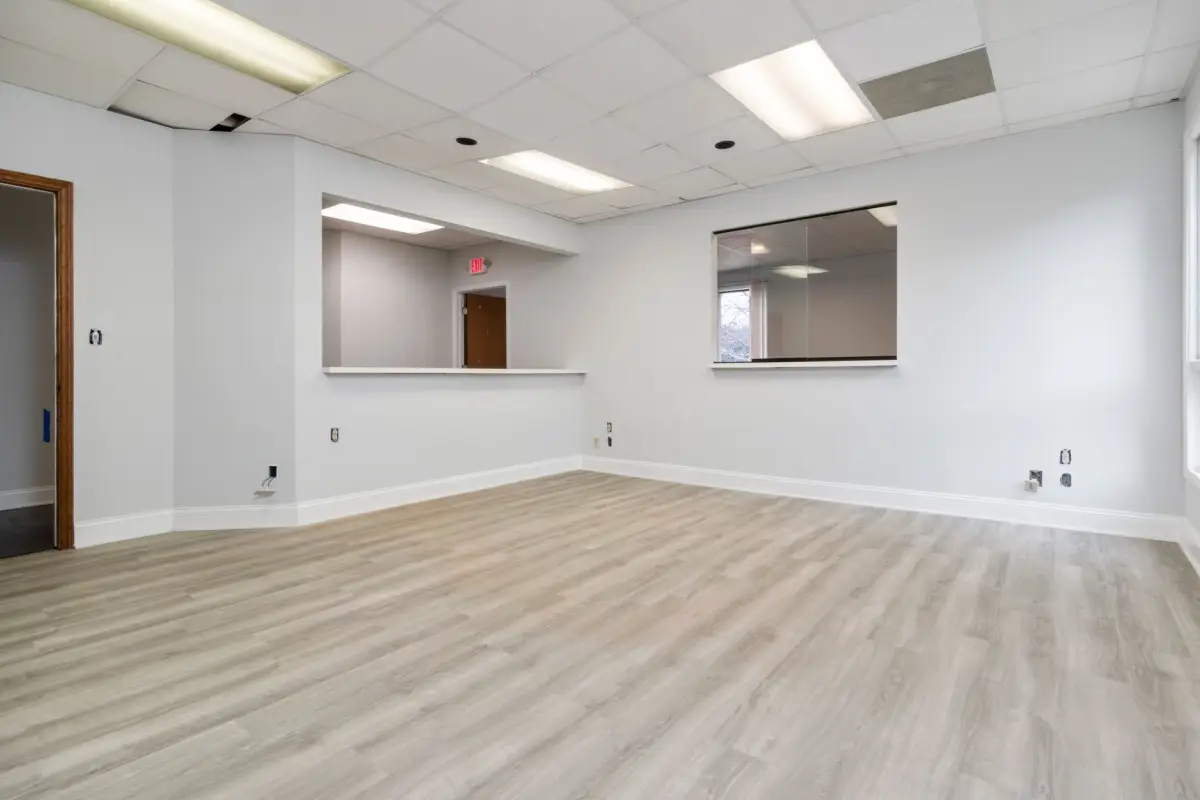
Commercial Drywall Finishing in Naperville, IL
Level 4 and Level 5 finish schedules taped, mudded, and sanded to spec for offices, retail build-outs, and healthcare spaces.
Naperville Elite Drywall is your local resource for commercial drywall finishing throughout Naperville, IL. We help businesses and general contractors connect with an experienced commercial drywall contractor who finishes to the level the project actually specifies.
Commercial finish work is spec-driven in a way residential finishing usually isn't — a project's finish schedule calls out the exact level (most often Level 4, sometimes Level 5) for each space, and that number comes from the architect or general contractor's documents, not a judgment call made on-site. A back-of-house storage area might be spec'd at Level 3, while the same building's customer-facing lobby is Level 5, and both are correct as long as they match what's actually called out.
Commercial spaces along Naperville's Route 59 and Ogden Avenue corridors, and in Downtown Naperville's mixed-use buildings, span the full range of finish requirements — a medical office with strict wall-smoothness standards for exam lighting, a retail storefront with a Level 5 accent wall, or a straightforward office suite finished consistently at Level 4 throughout. Getting the finish level matched to spec, then verified against it, is most of what this service actually does.
What’s Included in Your Commercial Drywall Finishing Quote
- Finish level matched to project specification (Level 3 through Level 5)
- Taping, three-coat mudding, and sanding per spec
- Consistent finish across large commercial square footage
- Verification against the project's finish schedule before sign-off
- Scheduling coordinated with other finishing trades (paint, flooring)
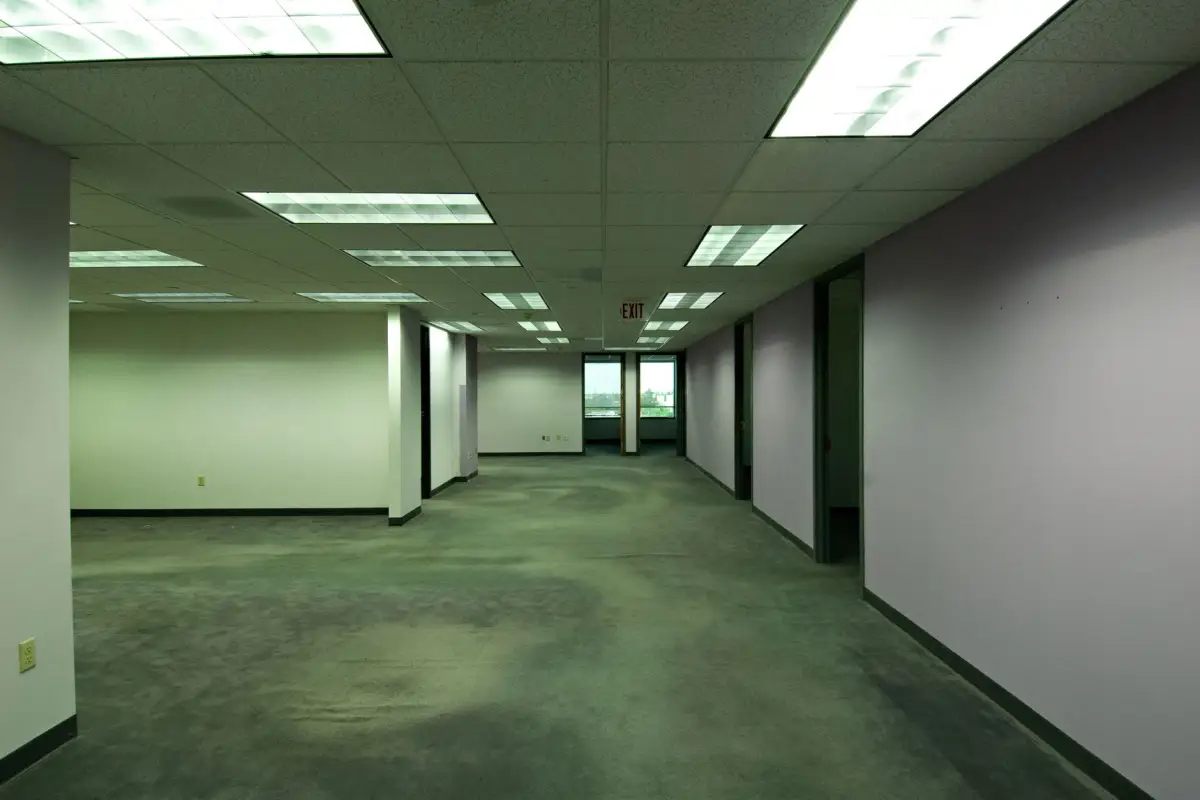
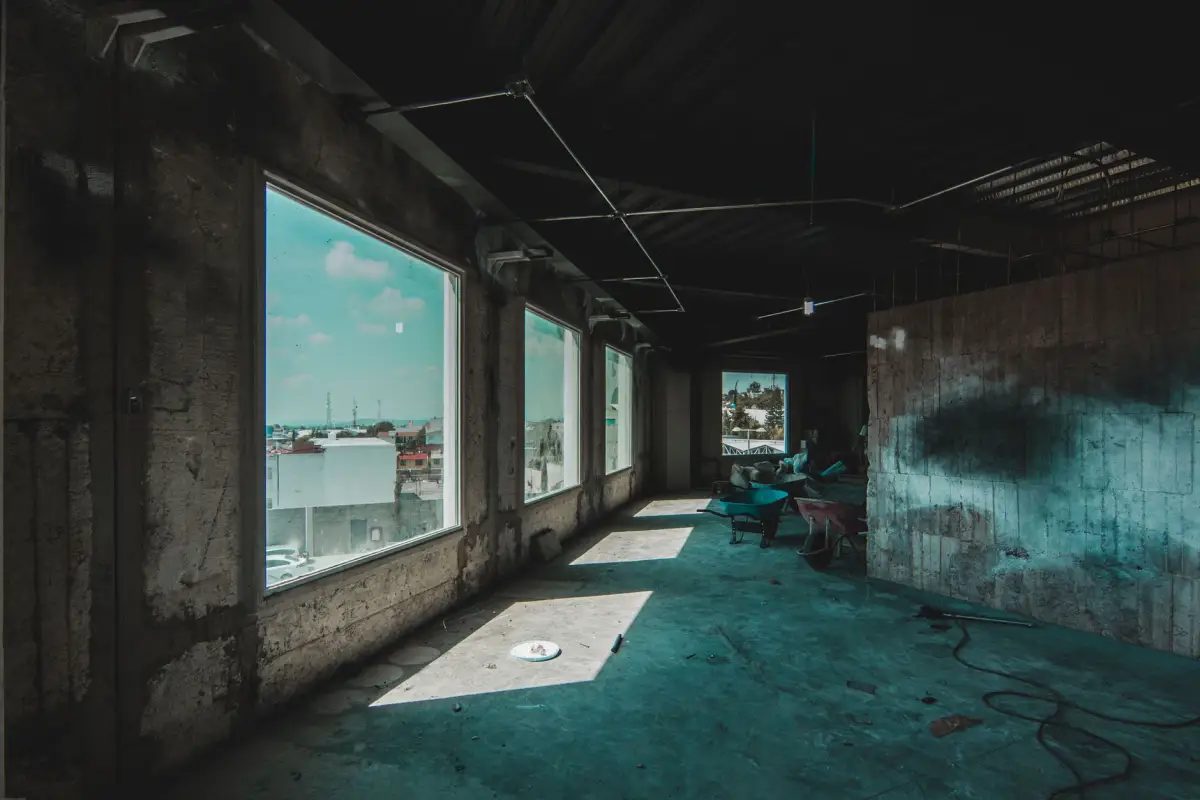
Commercial Drywall Finish Levels Explained
Commercial Drywall Taping
Taping on a commercial project follows the same fundamental process as residential taping — tape embedded in the first coat over every seam and inside corner — but at a scale where consistency across a large square footage matters more than on a single residential room. A commercial job might involve taping hundreds or thousands of linear feet of seams, and keeping that consistent from one end of the space to the other is part of what separates a professional commercial finish from a residential-scale approach applied to a much bigger job.
Commercial Drywall Mudding
The three-coat mudding process is standard, but commercial timelines often run tighter than residential ones, which sometimes calls for setting-type "hot mud" compound on earlier coats to allow same-day recoating instead of waiting overnight for standard compound to dry. This is a real technique tradeoff, not a shortcut — hot mud is harder to sand than standard all-purpose compound, so it's typically used on base coats and finished with standard compound on the final pass.
Level 4 Drywall Finishes
Level 4 is the most common commercial finish level, per the Gypsum Association's standard definitions — it means tape and three coats of compound at joints, two coats on fastener heads, all sanded smooth, and it's suitable for most wall and ceiling conditions under standard lighting. This is the default baseline called out on most office and general commercial finish schedules unless a specific area needs more.
Level 5 Drywall Finishes
Level 5 adds a thin skim coat of compound across the entire surface, not just the joints, which is what gives it a uniformly smooth appearance under severe lighting conditions — critical for spaces with strong natural light, glossy or dark paint (which shows imperfections more readily than flat, lighter colors), or accent walls meant to read as flawless. This level takes meaningfully more time and material than Level 4, which is reflected in the finish schedule and quote.
Paint-Ready Commercial Drywall
Once finishing is complete and verified against the specified level, the space is handed off paint-ready to the next trade. On a commercial schedule, this handoff timing matters — finishing has to be done and fully dry before painters can start, which is one more reason commercial finish work is scheduled tightly against the overall project timeline rather than in isolation.
Signs You Need Commercial Drywall Finishing
- New commercial drywall installation that needs to be taped and finished to spec
- A finish schedule calling out Level 4 or Level 5 for specific areas
- An existing commercial finish that isn't holding up to the space's lighting conditions
- A tenant improvement project on a schedule with painters waiting to start
- Inconsistent finish quality across a larger commercial space that needs to be brought up to a uniform standard
How Commercial Drywall Finishing Works
- 1
Confirm Finish Schedule
Before finishing starts, the project's finish schedule is reviewed to confirm the required level for each area — it's common for a single project to call out different levels for different spaces (Level 5 for a lobby or reception area, Level 4 for general office space, Level 3 for storage). Working from the documented spec rather than assuming a single level throughout the building avoids both under-finishing an area that needed more and over-finishing one that didn't.
- 2
Tape and Base Coats
Taping and the first coats of compound follow the same core process across the whole space, with attention to keeping technique consistent across what's often a much larger square footage than a residential job. On tighter commercial timelines, setting-type compound may be used on early coats to allow faster recoating, coordinated against the overall project schedule so drywall finishing doesn't become the bottleneck holding up painters or flooring crews.
- 3
Finish Coat to Spec
For Level 4 areas, the final coat is applied over joints and fasteners and sanded smooth. For Level 5 areas, an additional skim coat goes across the entire surface — not just the seams — which is the step that actually creates that level's signature uniform smoothness. This is checked under work lighting at multiple points across the space, not just near where the compound was applied, to catch any inconsistency before it's called finished.
- 4
Verify Against Finish Schedule
Once finishing is complete, the work gets checked against the project's finish schedule area by area, confirming the specified level was actually achieved and the surface is ready for the next trade. This verification step matters more on commercial projects than residential ones, since a finish level that falls short in a customer-facing or highly lit commercial area is a lot more visible — and a lot more costly to fix after paint — than the same shortfall would be in a typical home.
What Does Commercial Drywall Finishing Cost in Naperville, IL?
What Affects the Price
- Finish level required per area (Level 3, 4, or 5)
- Total square footage across the project
- Timeline constraints and whether faster-setting compound is needed
- Lighting conditions in specific areas (driving Level 5 requirements)
- Coordination requirements with other finishing trades
A finish schedule that specifies Level 5 only where it's actually needed — customer-facing areas, strong natural light — rather than throughout an entire project keeps costs proportional to what the space actually requires; this is worth confirming with the architect or GC before requesting a quote if the finish schedule seems to call for Level 5 everywhere.
What to Look for in a Naperville Drywall Contractor
Finishes to the Documented Spec
Work follows the project's actual finish schedule, area by area, rather than a single default level applied throughout.
Verified Before Handoff
Finished areas are checked against the finish schedule before being turned over to painters or the next trade.
Consistent Across Large Square Footage
Technique stays consistent from one end of a commercial space to the other, not just in the areas someone happens to inspect closely.
Scheduled to Keep the Project Moving
Finishing timelines are coordinated against the overall project schedule so drywall isn't the trade holding up paint or flooring.
Commercial and Residential Work
Commercial
This page covers finishing for existing or newly installed commercial drywall — for the installation itself, see Commercial Drywall Installation.
Residential
For residential finish-level work in a home, see the residential Drywall Finishing page instead.
When This Isn’t the Right Fit
- If this is a residential project, see the residential Drywall Finishing page instead — commercial finish-schedule pricing assumes a business or GC-managed project.
- If there's no finish schedule or spec document yet, that typically needs to come from the project's architect or general contractor before finish work can be accurately quoted.
- If you want a specific contractor you've already worked with, outside this relationship, that's a call you're free to make directly.
Frequently Asked Questions
- What's the difference between Level 4 and Level 5 drywall finish?
- Level 4 finishes joints and fastener heads with tape and compound, sanded smooth — suitable for most standard commercial lighting. Level 5 adds a thin skim coat across the entire surface, giving a uniformly smooth result needed for severe lighting, glossy paint, or highly visible customer-facing walls.
- How much does commercial drywall finishing cost in Naperville, IL?
- It depends on the finish level specified per area and total square footage. Level 5 costs more than Level 4 for the same area due to the added skim coat. Get an immediate on-site quote once a finish schedule is available.
- Who decides what finish level a commercial space needs?
- This is typically specified by the project's architect or general contractor in the finish schedule, based on lighting conditions, paint sheen, and how customer-facing the space is. The finishing work follows that spec rather than defaulting to one level throughout.
- Can commercial finishing be done on a tight project timeline?
- Yes — setting-type compound can allow faster recoating on early coats to help meet a compressed schedule, though the final coat is typically still standard compound for the best sanding results. Timeline needs are best discussed up front against the overall project schedule.
- Does every room in a commercial building need the same finish level?
- No — it's common for a single project to specify different levels for different areas, such as Level 5 for a lobby and Level 4 for general office or storage space, based on what each area's lighting and visibility actually requires.
Learn More
- Gypsum Association — GA-214 Finish Level Standards — The industry-standard reference defining commercial drywall finish levels.
- USG — Commercial Finishing Technical Resources — Manufacturer technical guidance for commercial-scale drywall finishing.
Need Commercial Drywall Finishing in Naperville, IL?
Tell us what’s going on and get an immediate on-site quote — no charge for the estimate, and no obligation to book it.
Get My Free Estimate